

In today’s world of ever-rising house prices, it can be daunting to consider how much you may need to save for a house deposit to get your first step onto the property ladder. Even if you are already on the ladder and hoping to finally up-size to the family home of your dreams, it can seem like a giant leap. But fear not, as many options are available, even for small deposits, which may suit your circumstances, whether government schemes, low deposits or a guarantor mortgage.
House Deposit Percentages
Currently, in the UK, most mortgage lenders will require a 5% house deposit as a minimum to put towards your purchase price. This means 0% deposits are not readily available through high street banks or even specialist banks at this time.
Your Income
Sometimes it’s not only the amount of house deposit you have that limits your options when buying your first home. For example, if you have saved up the 10% deposit needed by most mortgage lenders and finally want to move out of the family home, you may find that you can’t borrow as much as you need due to your income.

Generally, mortgage lenders will allow borrowers access to 4.5 X their income. If you're looking to purchase your property on your own, this can sometimes leave you a little short of where you might be hoping, but it doesn’t have to.
Guarantor Mortgages
There are mortgage lenders who offer guarantor mortgages or joint borrower sole proprietors. This enables you to be the sole owner of your new property. Still, you can add an additional person (usually a close family member) to your mortgage application and use their income in the affordability calculation. This allows you to achieve a higher loan amount than you would have on your own. The guarantor won’t go on the title deeds to your house, but they are still liable if you miss a payment, so it is important to discuss this with everyone involved.

Guarantor mortgages are availableHow do I work out the house deposit I need?
How much deposit you will need to put towards your new home is based on the purchase price of the property you are looking to buy. For example, if you are looking at a property with a value of £200,000 and you would like to put down the lowest deposit available (usually 5%) the deposit required would be £10,000. Based on this example, you would require a 95% mortgage (£190,000) to cover the rest of the property purchase, subject to affordability checks.
You can easily work out the house deposit amount with this calculation:
Purchase Price X Percentage = Deposit Amount.
Example: £200,000 (purchase price) X 5% = £10,000 (deposit amount)
Government mortgage schemes for new homes
If you have a 5% house deposit but you’re unable to afford the full 95% mortgage, there may be government schemes suitable for you. Currently the government is offering first time buyers, looking at new build properties, schemes such as the Help To Buy: Equity Loan. This is an equity loan of up to 20% of the house price (40% in London). This means you would only need a 75% mortgage for the remainder of the purchase.
As an example, if you bought a property for £200,000, you would be eligible for a 20% government loan of £40,000 along with your 5% deposit of £10,000 meaning you would only require a mortgage of £150,000. It is important to know that the government will retain the 20% share in your property until you either repay the 20% or sell your property in the future. You will start paying interest on the equity loan after 5 years if it is not repaid, so it is important you get advice to ensure this is the right scheme for you and your circumstances.
Loan to Value
Loan To Value (LTV) is the difference between the purchase price of a property and the mortgage amount you require. To keep it simple we will look at a property valued at £200,000 and a deposit of £20,000. To calculate your LTV you need to know the amount of mortgage you will be borrowing.
Purchase Price - House Deposit = Mortgage Amount
Example: £200,000 - £20,000 = £180,000
Now we know the mortgage amount is £180,000, we can calculate the LTV.
Mortgage Amount ÷ Purchase Price = a decimal figure X 100 = LTV
Example: £180,000 ÷ £200,000 = 0.9 X 100 = 90
All mortgage lenders use LTV thresholds to decide what rates they will charge. Where your mortgage amount falls within these thresholds, will determine the rate of interest you will be charged. It is worth noting, the higher the LTV, the higher the interest rate charges you will incur. LTV thresholds are usually set at 5% intervals such as 75%, 80%, 85% and so forth.
What are your property goals?
When recommending how much deposit to put towards your new purchase it’s always important to keep in mind what your short and long term goals are for the property. There is no right or wrong answer.
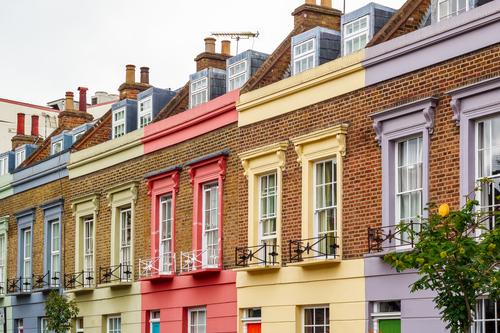
If you are looking at a relatively new property with minimal cosmetic or structural work, or it’s your forever home then it may be worthwhile to put in as much deposit as you can afford, towards the purchase price. There are many benefits of doing this such as, lowering your borrowing which means your mortgage could be paid off over a shorter period of time enabling you to become mortgage free. It could also reduce your monthly repayment amount if your monthly budget is important to you, leaving more money to do the things you enjoy. In addition, the greater deposit you can put in up front can make a difference to the rate of interest which mortgage lenders will offer. The higher the deposit you can afford, the lower the rate is likely to be. The best rates available on the market are usually anything at 75% Loan To Value (LTV) and below.
Alternatively, if you wish to take on a renovation project and fix up an older property, to put your own stamp on it, then a smaller deposit may suit you. This would leave you with more funds available to carry out the building works. Once the property is completed, you may enjoy capital value growth ( in house price) which you may benefit from when you are ready to remortgage. However, if you are purchasing a starter home or a using a property as a steppingstone for a few years before you finally settle somewhere else, the right amount of deposit is what is affordable to you and enables you meet your property goals at that time.


